System Design · Authority · Enforceability
Enforceable State:
Designing Authority
DOMAIN
Smart City / SLA
FOCUS
System Design
STATUS
Design Exploration
Context: Physical asset management is defined by signal divergence. The Driver observes physical reality (signs), the Sensor records digital reality (logs), and the Operator interprets context. When these signals conflict, enforcement becomes a liability risk.
TL;DR
- Problem: Fragmented truth sources led to unenforceable penalties.
- Solution: A state-driven protocol that synchronizes Driver, Operator, and System Actors.
- Key Insight: You cannot fix downstream disputes with dashboards; you must fix the upstream capture of state.
The Decision Problem
“Is this event a valid, enforceable breach?”
The "Truth" was fragmented. The Driver had one truth (physical sign), the Sensor had another (digital timestamp), and the Operator had a third (observation). Without a single, synchronized source of truth, every penalty decision was a gamble.
FIG 01: System > Operator > Driver
System Actors
1. The Driver
Owns "Physical Reality".
2. The Operator
Owns "Contextual Observation".
3. The System
Owns "Legal Reality".
Hierarchy of Truth
To resolve ambiguity, we established a hard-coded hierarchy of evidence.
Physical Infrastructure
Signpost
Payment Log
Receipt
Sensor Event
Camera
Observations
Human Eye
System Mechanics
The enforcement logic is built on a finite state machine. An asset cannot move from "Valid" to "Violation" without passing through a "Grace" state.
Decision: The "Grace" State
REJECTED ALTERNATIVE
Instant Enforcement
Too rigid. Creates a "predatory" perception and increases "I was just paying" disputes by 400%.
CHOSEN DIRECTION
Deterministic Buffer
Legal buffer is encoded. If payment arrives in this window, the violation self-corrects.
Parking Session as a State Machine
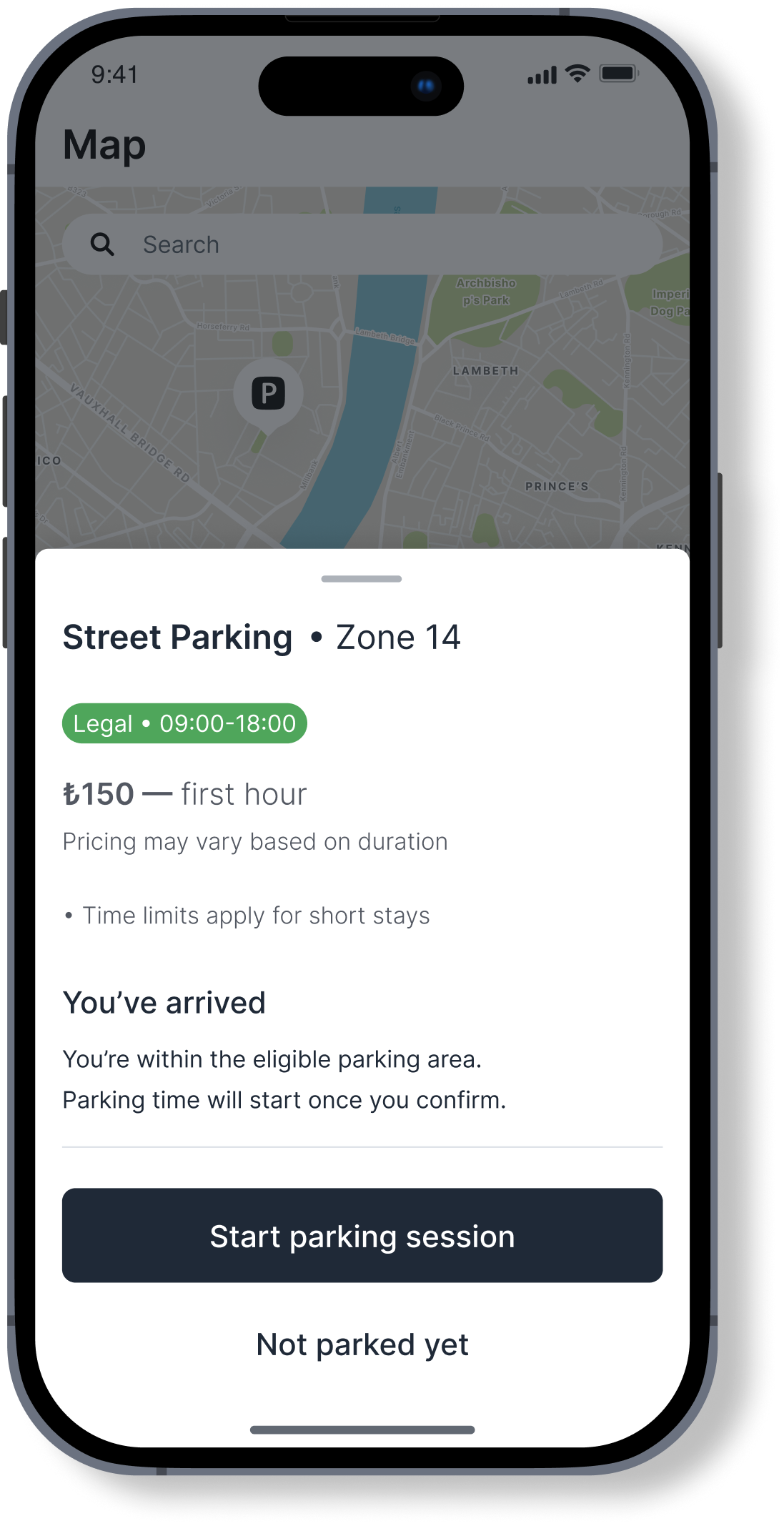
STATE 01
Eligibility Check
Is this vehicle subject to rules? Diplomats and emergency vehicles are invisible to the engine.
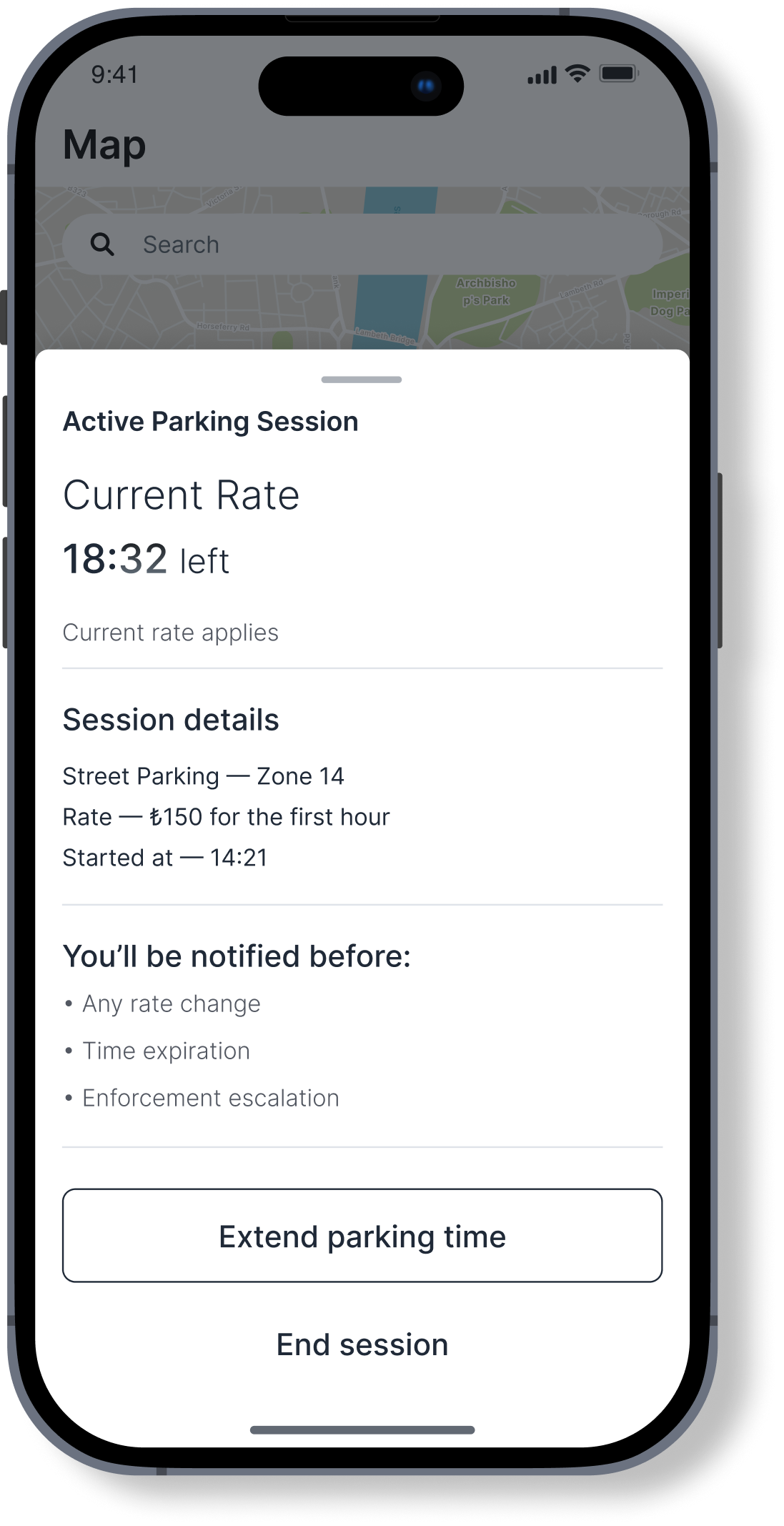
STATE 02
Active Session
Vehicle is liable but compliant. "Do nothing" is the hardest feature to design.
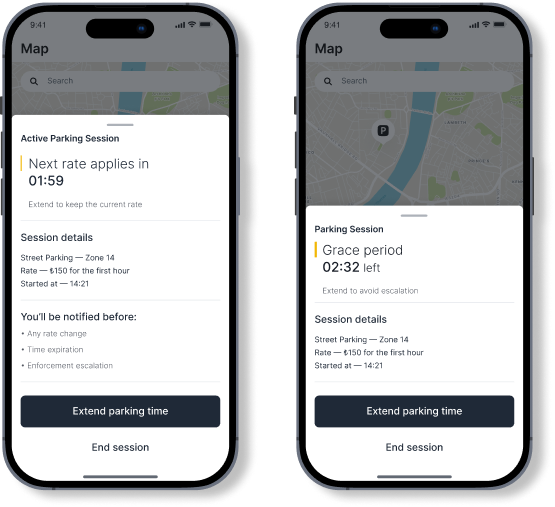
STATE 03
Grace Period
Limbo. Money ran out, but law requires a buffer. Dangerous state where truth is fluid.
STATE 04
Escalation Ready
Violation locked. Burden of proof shifts to human to gather evidence.

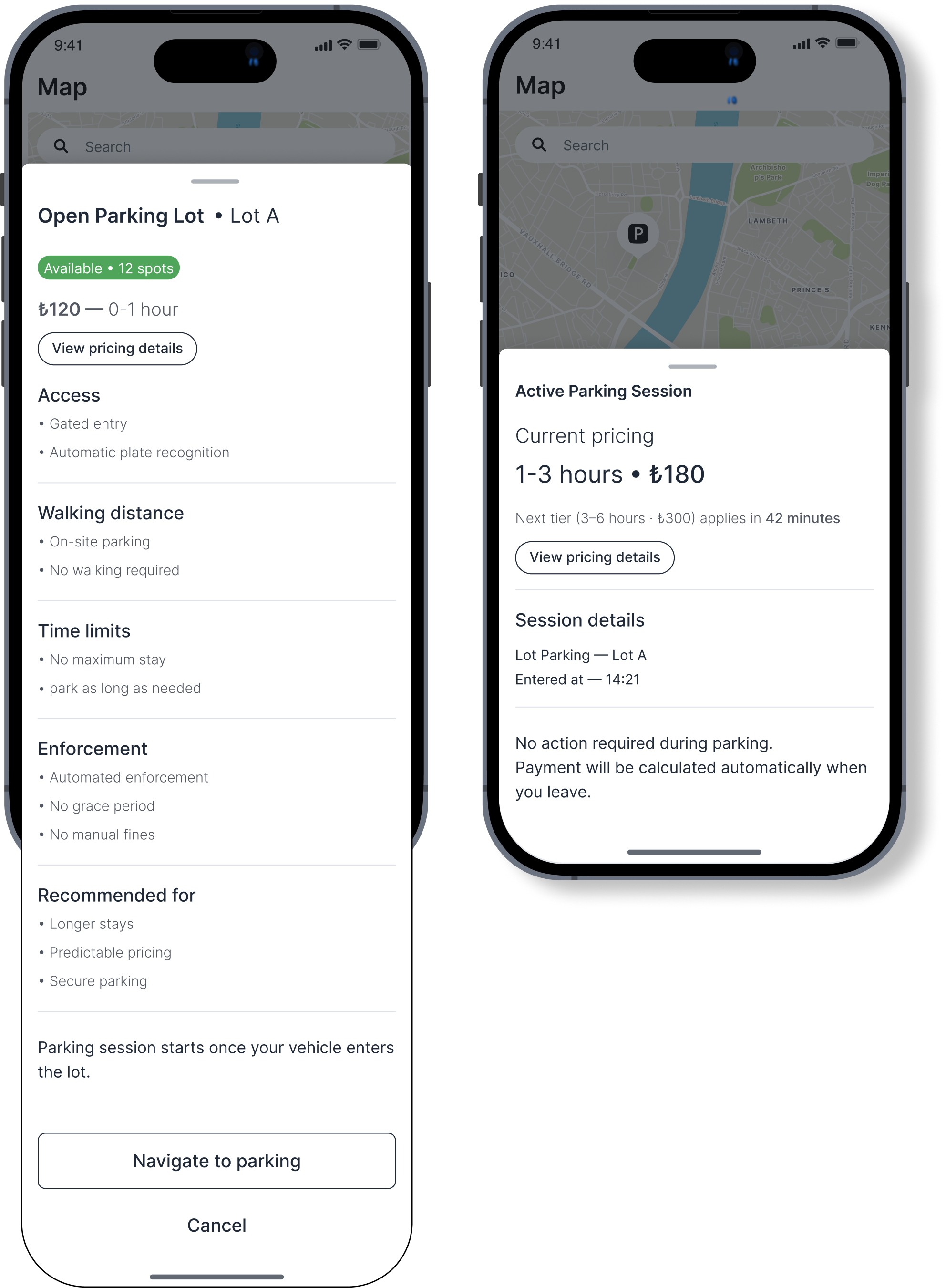
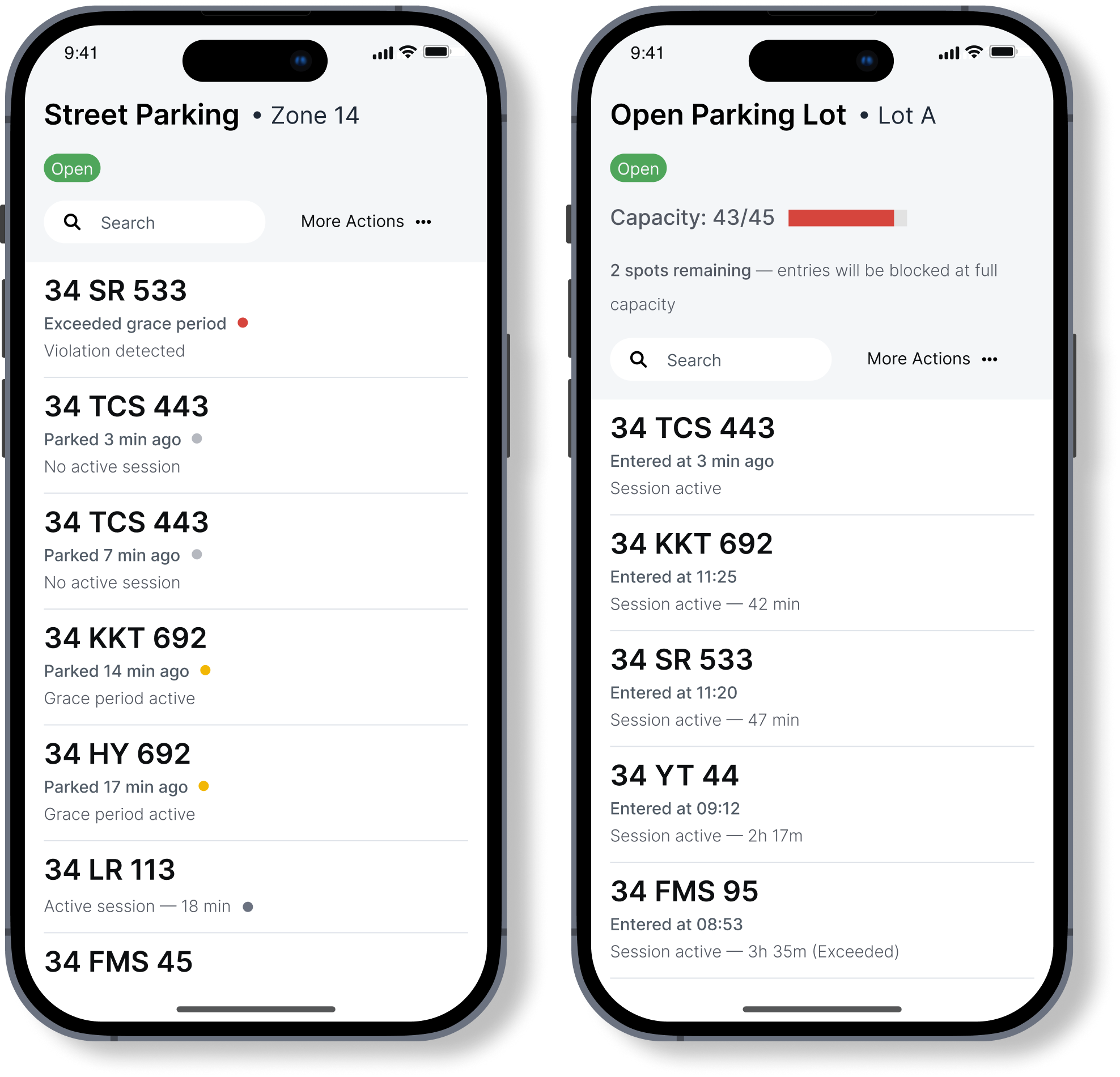
One System, Two Contexts
This project proves that the same core authority model governs both probabilistic (street) and deterministic (lot) environments. The only variable is who holds the "burden of truth".
Operator Interface
When the system fails to determine state, the human operator steps in. The UI is designed to validate authority, not just display data.
SCENARIO: "I Didn't See The Sign"
When a driver claims no signage, the Operator Interface enforces a check: "Is the Anchor Photo visible?" If 'No', the enforcement cannot proceed. The UI disables the "Issue Fine" button.
Outcome: The interface protects the city from legally void fines.
Constraints
If the system is 30s slow, a user might pay *after* enforcement starts. Real-time sync is mandatory.
App says "Free", Sign says "Paid". Legal precedent prioritizes physical signage.
WHAT THIS IS
System design exploration.
WHAT THIS IS NOT
Pixel-perfect consumer app.